
 Save
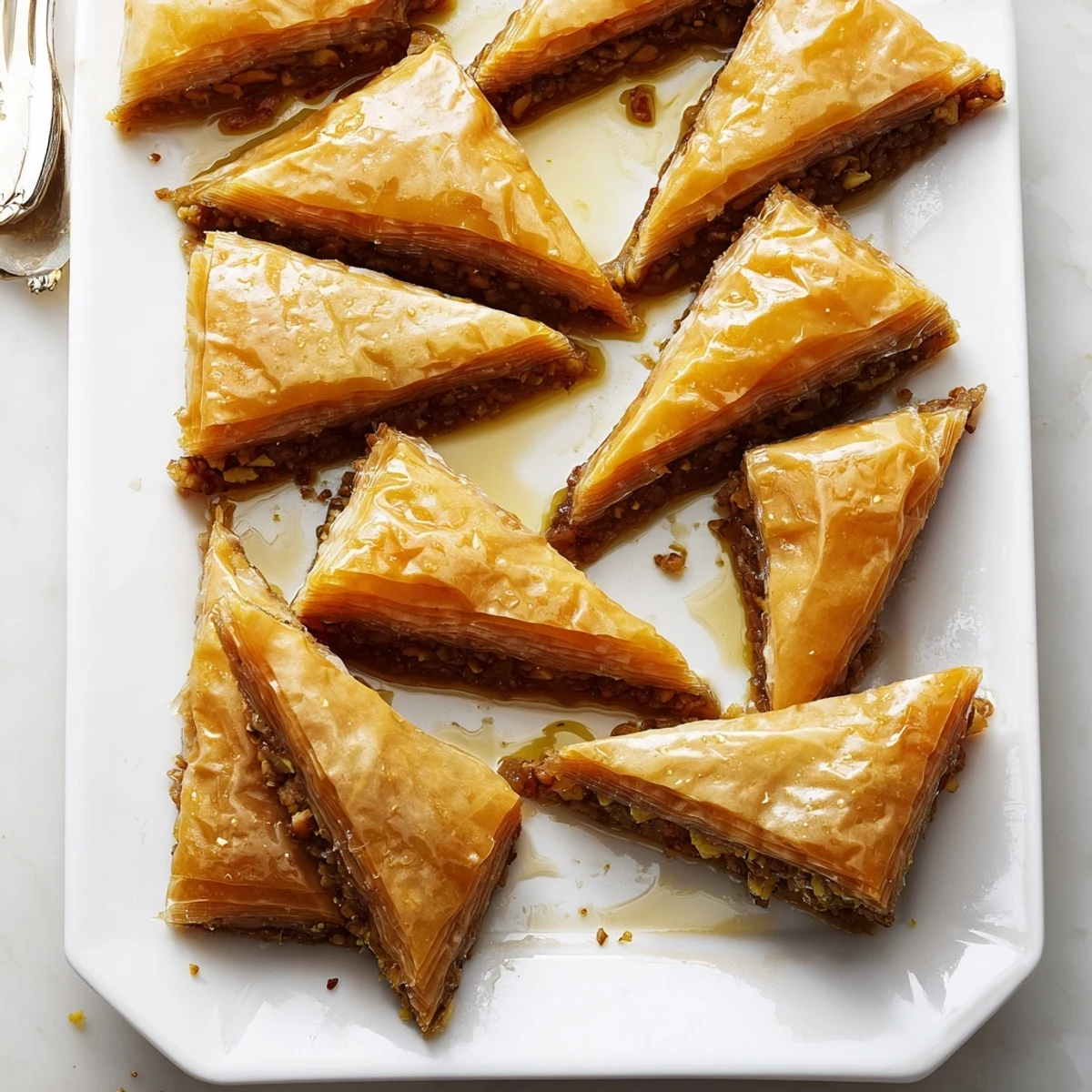
Save Traditional Middle Eastern sweet featuring crisp layers of buttered phyllo pastry alternated with a aromatic blend of walnuts, pistachios, and almonds. The assembled pastry is baked until golden brown, then immediately soaked in a warm syrup infused with honey, lemon, and cinnamon. This creates the signature sticky-sweet coating and preserves the delightful crunch. Best served at room temperature with strong coffee or tea.
My grandmother kept her phyllo sheets under a slightly damp kitchen towel, insisting that dry pastry was the enemy of good baklava. I can still hear her telling me to work quickly but gently as we layered butter and nuts on Sunday afternoons. The smell of cinnamon and melting butter would fill the entire house, drawing everyone into the kitchen. Those afternoons taught me that patience with pastry pays off in the most delicious way.
I made this for my first dinner party as a newlywed, feeling ridiculously ambitious. The syrup sizzled dramatically when I poured it over the hot pastry, and my husband thought I had done something wrong. But when we took that first bite, the honey cinnamon flavor knocked us both quiet. Now it is the only dessert my mother in law specifically requests when she visits.
Ingredients
- 400 g phyllo dough: Keep it covered with a damp towel while working because dried out sheets will crack and frustrate you completely
- 250 g unsalted butter, melted: Brush each sheet generously because the butter is what creates those gorgeous flaky layers
- 200 g walnuts, 100 g pistachios, and 80 g almonds: Finely chopped nuts distribute evenly and provide that classic crunch throughout every bite
- 80 g granulated sugar and 1 tsp ground cinnamon: This aromatic mixture balances the richness of the butter and nuts
- 250 ml water, 300 g sugar, 2 tbsp lemon juice, 2 tbsp honey: The syrup must be slightly cool when poured over hot baklava for the perfect texture
- 1 cinnamon stick and orange peel strip: These aromatics infuse the syrup with depth that plain sugar cannot achieve
Instructions
- Preheat and prepare your baking dish:
- Set your oven to 180°C and butter a 23x33 cm dish thoroughly, getting into all the corners
- Mix your filling:
- Combine all three nuts with sugar and cinnamon until evenly blended
- Keep your phyllo moist:
- Unroll the dough and immediately cover it with a damp towel, working with one sheet at a time
- Build the first layer:
- Lay down 8 sheets of phyllo, brushing each one with melted butter before adding the next
- Add your first nut layer:
- Sprinkle about one third of the nut mixture evenly across the buttered phyllo
- Continue layering:
- Add 4 more buttered phyllo sheets, then half the remaining nuts, repeat with 4 more sheets and the rest of the nuts
- Finish with pastry:
- Top with remaining phyllo sheets, buttering each one as you work
- Score before baking:
- Cut through all the layers into diamonds or squares using a sharp knife
- Bake until golden:
- Bake for 35 to 40 minutes until the phyllo turns deep golden brown and crisp
- Make the aromatic syrup:
- Simmer water, sugar, lemon juice, honey, cinnamon stick and orange peel for 10 minutes then cool slightly
- The magic moment:
- Pour the slightly cooled syrup slowly over the hot baklava the moment it comes out of the oven
- Let it rest:
- Allow the baklava to cool completely so it can absorb all that syrup
 Save
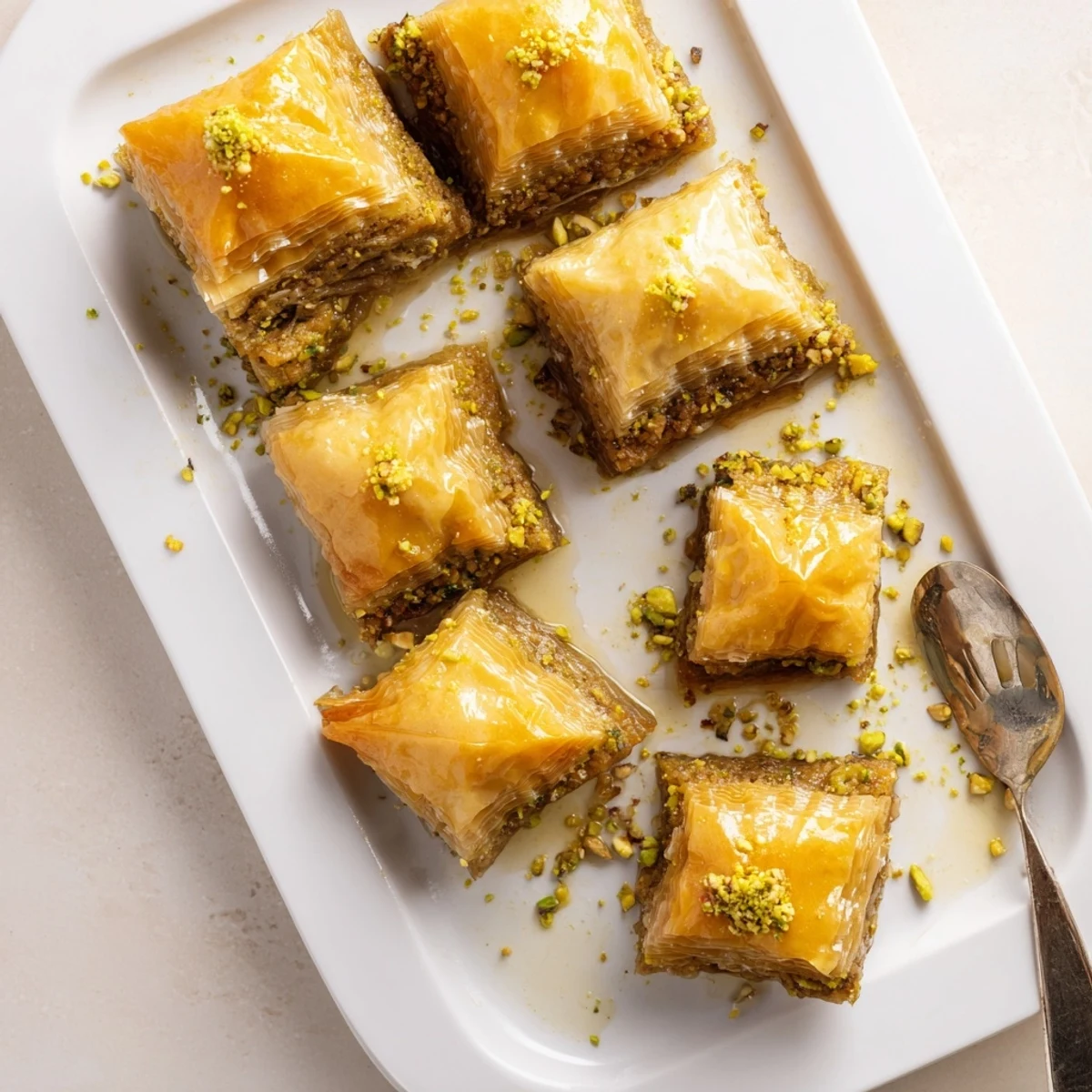
Save This recipe sat on my counter cooling during a housewarming party, and I watched guest after guest sneak back to the kitchen for just one more piece. The hostess eventually asked me to leave the remaining tray because she wanted it for breakfast the next day. That is when I knew baklava is not just dessert, it is the kind of treat that makes people feel at home.
Making Ahead
Baklava actually improves after sitting for a day or two, wrapped tightly at room temperature. The flavors meld together and the texture becomes even more luxurious. I often assemble it the day before a gathering, then bake and syrup it fresh that morning.
Serving Suggestions
Small pieces go a long way because this dessert is incredibly rich. A little dusting of powdered sugar right before serving makes it look extra special. Turkish coffee or strong black tea cuts through the sweetness perfectly.
Storing Your Baklava
Keep it in an airtight container at room temperature for up to a week. Never refrigerate it because the cold makes the phyllo soggy and sad. You can freeze assembled unbaked baklava for up to three months, wrapped well in plastic and foil.
- Bring frozen baklava to room temperature before baking
- Add a few extra minutes to the baking time if frozen
- Syrup only after baking, whether fresh or frozen
 Save
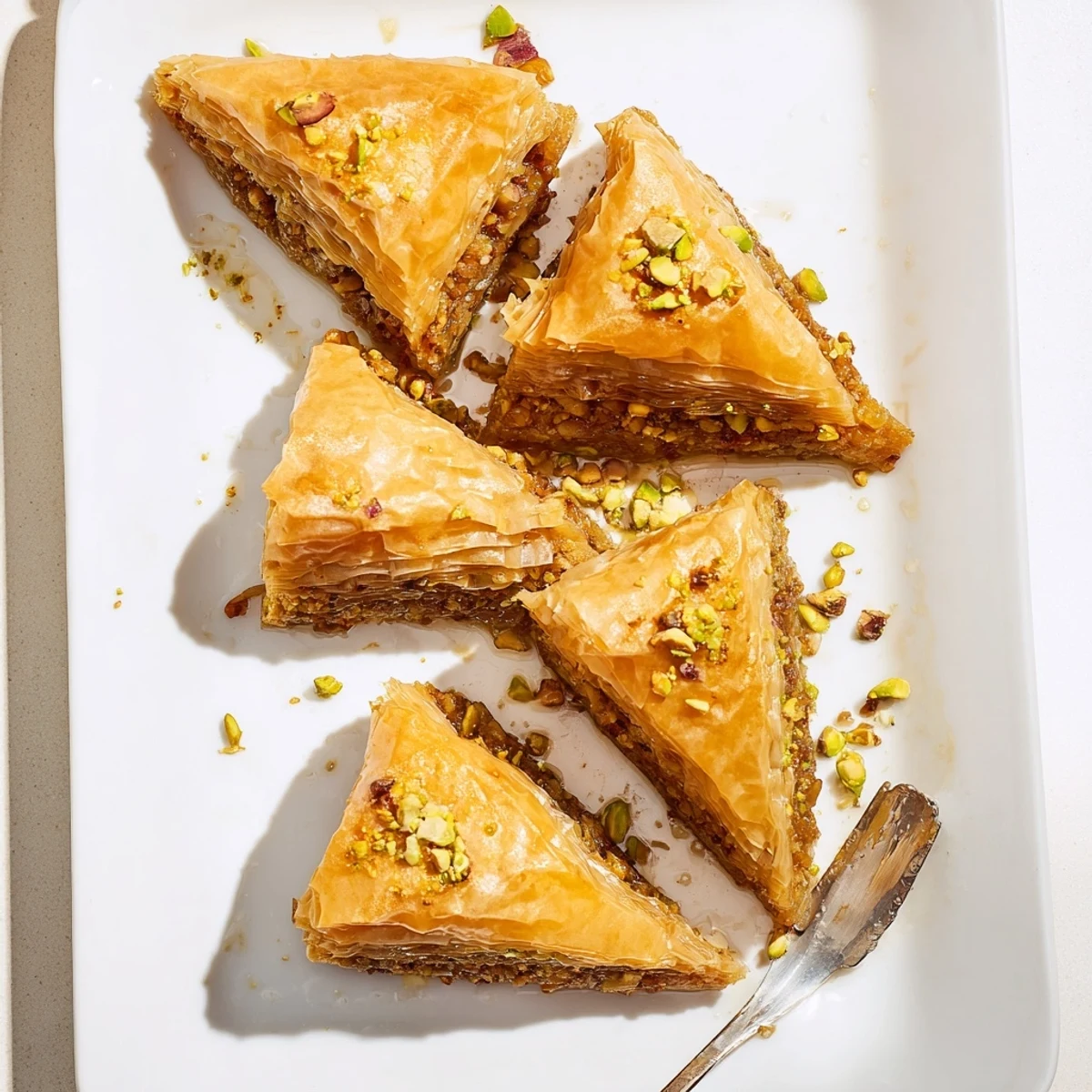
Save There is something deeply satisfying about cutting into that crisp top layer and hearing the crackle. Every time I make baklava, I think about all the hands that have made this same dessert across generations and borders.
Recipe FAQs
- → What makes baklava so crispy and flaky?
-
The signature crispness comes from brushing each individual phyllo sheet generously with melted butter before layering. This creates the flaky texture that remains even after soaking in syrup. The high oven temperature of 180°C ensures proper crisping before the syrup is added.
- → Can I use different nuts in this pastry?
-
Absolutely. While the classic combination includes walnuts, pistachios, and almonds, you can substitute with hazelnuts, pecans, or even cashews. Many regional variations prefer using just one type of nut, typically pistachios in Turkey or walnuts in Greece.
- → Why must the syrup be cooled before pouring?
-
The syrup should be slightly warm but not boiling hot when poured over the freshly baked pastry. If too hot, it can make the phyllo soggy. If completely cold, it won't absorb properly. The temperature difference creates that perfect balance of crispy layers and sticky sweetness.
- → How long does baklava stay fresh?
-
Properly stored in an airtight container at room temperature, it stays fresh for up to one week. The syrup actually helps preserve the pastry. You can also refrigerate for up to two weeks, though the texture may become slightly denser. Bring to room temperature before serving.
- → What's the secret to cutting clean diamond shapes?
-
Cut through all the layers before baking using a very sharp knife. Sawing motions will tear the delicate phyllo. A gentle, firm downward motion works best. The cuts will set during baking, making it easier to separate the pieces after soaking.
- → Can I freeze this for later?
-
Yes, you can freeze the assembled, unbaked pastry wrapped tightly in plastic and foil for up to three months. Bake from frozen, adding about 10 minutes to the baking time. Alternatively, freeze after baking and before adding syrup, then thaw and reheat before pouring warm syrup.