
 Save
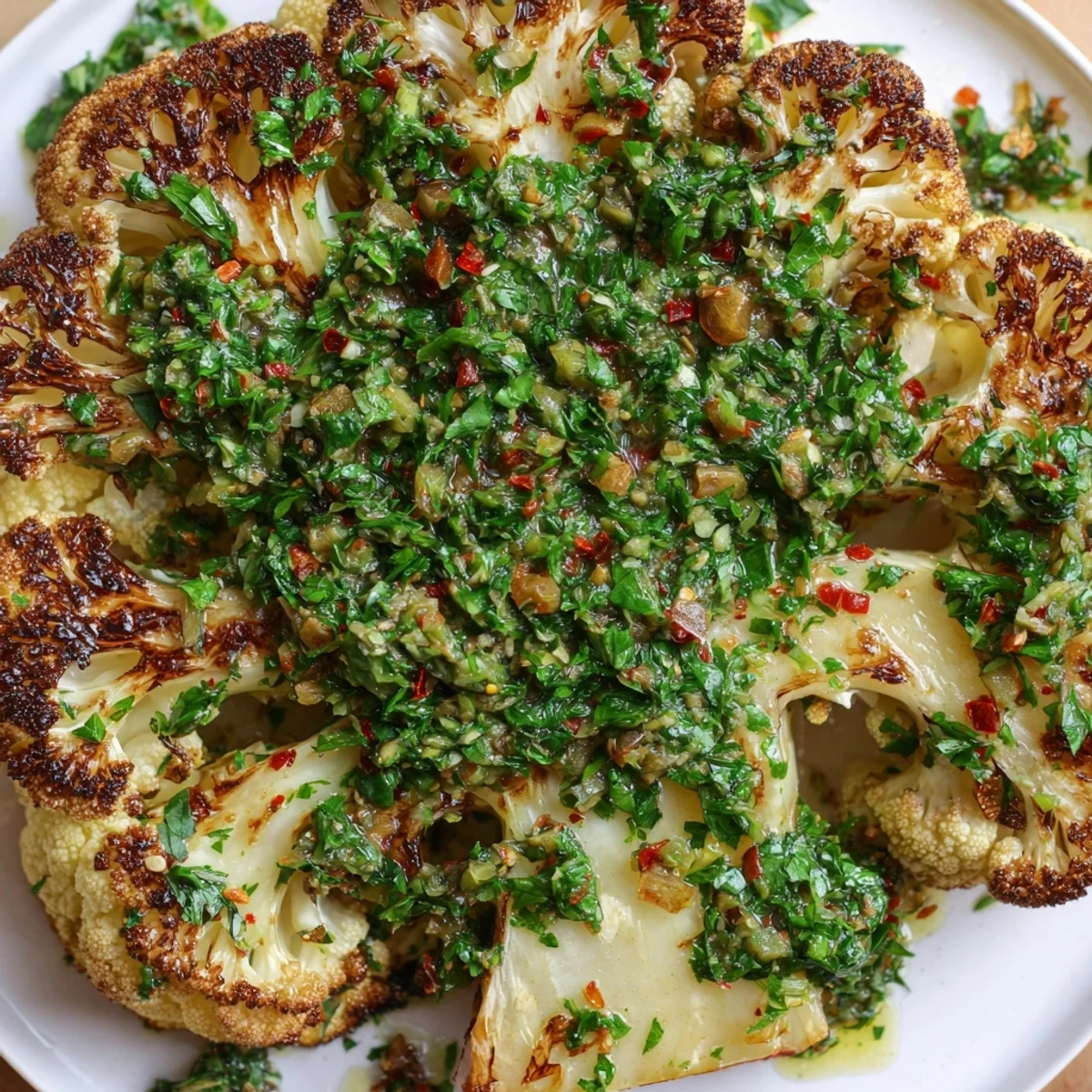
Save Enjoy thick-cut cauliflower slices roasted to perfection with spices until golden brown. The steaks are brushed with olive oil and seasoned with smoked paprika and garlic for a savory base. While cooking, blend parsley, cilantro, oregano, garlic, and vinegar into a zesty chimichurri. Drizzle this vibrant, oil-based sauce over the tender cauliflower for a fresh, aromatic finish.
Last summer, I was at a farmer's market when a vendor handed me a massive head of cauliflower and said, "Have you ever thought about cutting it like a steak?" I hadn't, but something clicked. Within days, I was experimenting with thick cuts and roasting them until the edges turned golden and nutty. When I drizzled the first batch with a vibrant green chimichurri sauce—something I'd learned from a trip through Argentina—my entire family fell silent mid-bite. That moment changed how I cook vegetables forever.
I made these for a dinner party where I had a skeptical friend who claimed she "didn't really eat vegetables." She went back for seconds and asked for the recipe before dessert even arrived. Watching someone's perception of a vegetable shift in real time over dinner is one of my favorite kitchen magic tricks.
Ingredients
- Cauliflower heads (2 large): The star of the show—look for dense heads with tight, compact florets because they hold up better when sliced and roasted.
- Olive oil (3 tbsp for steaks, 1/2 cup for sauce): Good olive oil matters here; it carries flavor and creates those crispy, caramelized edges you're after.
- Smoked paprika (1 tsp): This adds a subtle smokiness that makes people ask what secret ingredient you're hiding.
- Garlic powder (1/2 tsp) and black pepper (1/2 tsp): The backbone seasonings that keep things simple and balanced.
- Sea salt (1/2 tsp for steaks, 1/2 tsp for sauce): Salt is what brings every flavor into focus—don't skip it or rush it.
- Fresh parsley (1 cup): The workhorse of chimichurri; use the leafy parts and don't be afraid of how much you need.
- Fresh cilantro (1/2 cup): This adds a brightness that feels almost citrusy; if it's not your thing, swap in extra parsley or basil.
- Fresh oregano (2 tbsp) or dried (1 tbsp): Fresh oregano has a delicate, slightly minty edge that dried can't quite match, but dried works in a pinch.
- Garlic (3 cloves, minced): Mince it fine so it distributes evenly and doesn't overpower in any single bite.
- Red wine vinegar (3 tbsp): The acid that wakes up your palate and balances the richness of the oil.
- Red pepper flakes (1/2 tsp): This gives a gentle heat that builds slowly rather than shocking your mouth.
Instructions
- Heat your oven and prep your pan:
- Preheat to 425°F and line a large baking sheet with parchment paper so your steaks don't stick and cleanup is effortless. A hot oven is essential for getting those golden, caramelized edges.
- Slice your cauliflower into steaks:
- Remove the leaves, trim the stem, and cut the head vertically into 1-inch thick slices, keeping the core intact so the steak holds together. You'll get 2–3 beautiful steaks per head, and any florets that break off can be roasted alongside or saved for another meal.
- Season and brush:
- Arrange steaks on the baking sheet, brush both sides generously with olive oil, then sprinkle the smoked paprika, garlic powder, pepper, and salt evenly over everything. The oil helps the seasoning stick and browns the cauliflower as it roasts.
- Roast until golden:
- Roast for 15 minutes, then carefully flip each steak and roast for another 12–15 minutes until the edges are deeply golden and a fork easily pierces the flesh. The caramelization is where the magic happens.
- Build your chimichurri while steaks cook:
- Combine the parsley, cilantro, oregano, and minced garlic in a bowl, then stir in the olive oil, red wine vinegar, red pepper flakes, salt, and pepper. Let it sit at room temperature so the flavors marry and intensify—this brief rest makes a real difference in the final flavor.
- Plate and serve:
- Transfer the roasted steaks to a platter and spoon the chimichurri generously over each one. Serve while the cauliflower is still warm so the sauce mingles with the heat.
 Save
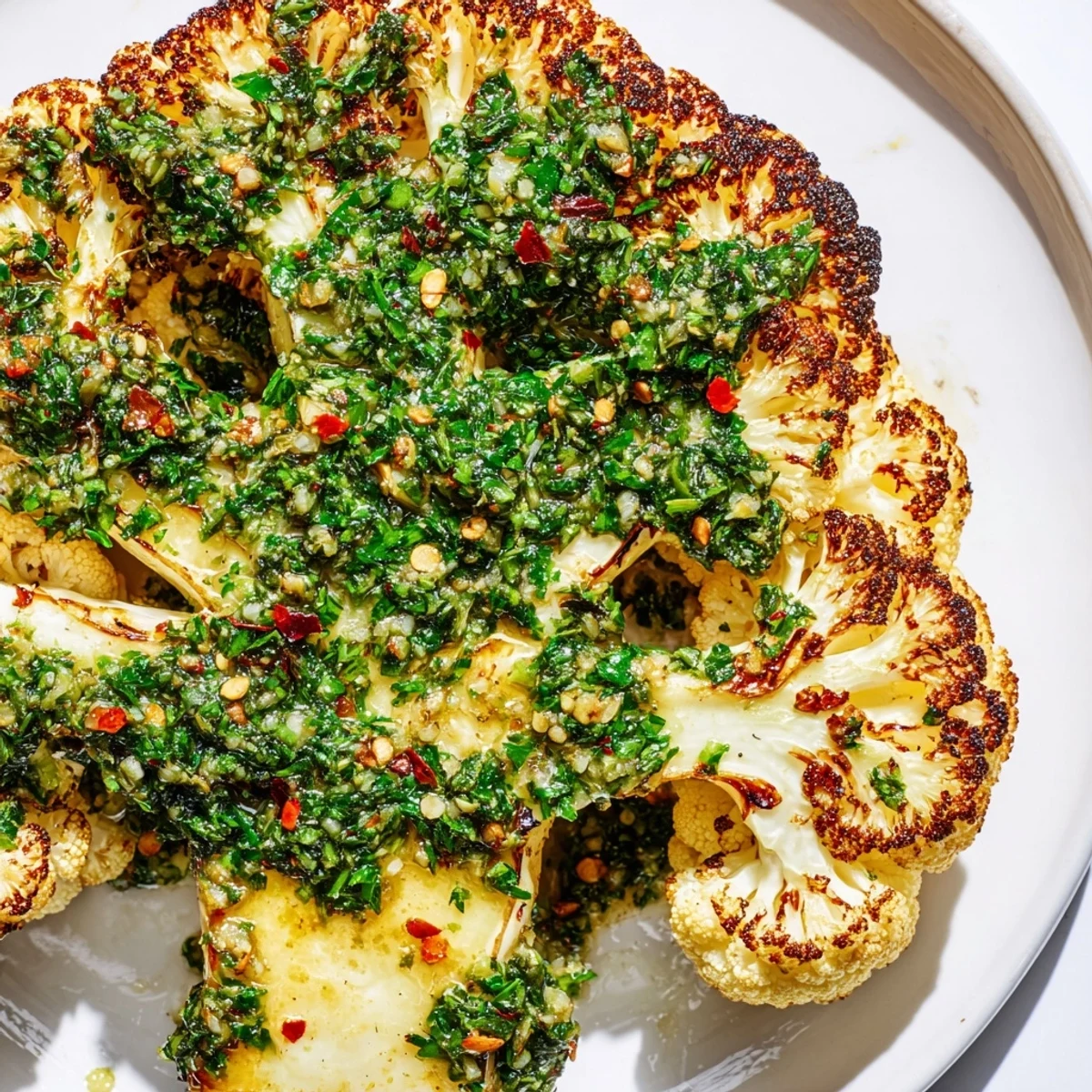
Save There's something deeply satisfying about pulling a sheet of roasted cauliflower from the oven, seeing those caramelized edges catch the light. It's a moment where humble vegetables become something worth writing home about.
Why Cauliflower Steaks Work
Cutting cauliflower into thick slices instead of florets changes everything. You get a sturdy surface that crisps and browns, a tender interior that becomes almost creamy when roasted, and a vegetable that looks substantial on the plate. The thickness also means you can flip it without it falling apart, which matters more than you'd think when you're trying to impress someone or just have a peaceful cooking experience.
The Chimichurri Magic
Chimichurri is one of those sauces that works everywhere—over roasted vegetables, grilled meats, fresh bread, or even stirred into a grain bowl the next day. The ratio of herbs to oil is key; you want it vibrant and alive, not drowsy. Fresh herbs are what make it special, but if you're in a pinch, you can use dried oregano and still pull off something delicious that tastes fresher than expected.
Serving and Variations
These steaks shine as a vegetarian main course alongside a quinoa pilaf or simple grain, or as a stunning side to grilled fish or chicken. You can also add crunch with toasted pine nuts, pumpkin seeds, or even crispy breadcrumbs before serving. The beauty is that the foundation is flexible, so play with what you have on hand.
- Swap cilantro for basil or mint if you want a different herbaceous angle.
- Add a squeeze of fresh lemon or lime juice to the chimichurri right before serving for extra brightness.
- Leftover chimichurri keeps in the fridge for a few days and tastes even better the next day.
 Save
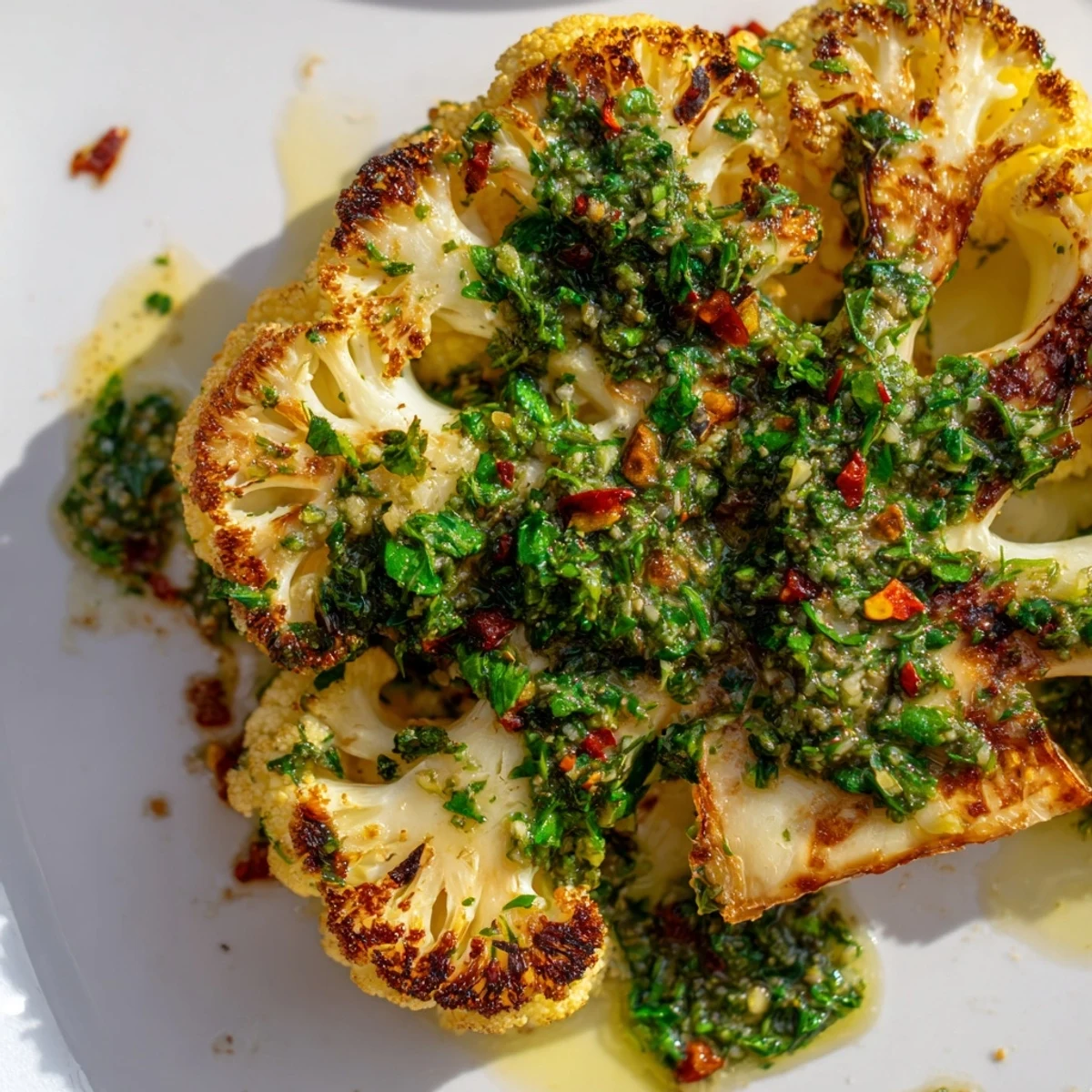
Save This recipe reminds me why I love cooking vegetables—they deserve attention, care, and a vibrant sauce to celebrate them. Make this once, and it becomes a regular rotation in your kitchen.
Recipe FAQs
- → How do you cut cauliflower steaks?
-
Trim the stem but keep the core intact, then slice the cauliflower head vertically into 1-inch thick slabs to hold them together during cooking.
- → Can I use dried herbs in the sauce?
-
Fresh herbs provide the best texture and flavor for chimichurri, though you may use dried oregano if fresh is unavailable.
- → What pairs well with this dish?
-
These steaks complement grilled meats beautifully or serve as a hearty vegan main alongside quinoa or roasted vegetables.
- → How should leftovers be stored?
-
Keep the cauliflower and sauce in separate airtight containers in the refrigerator to maintain texture for up to three days.
- → Is this dish spicy?
-
The sauce has a mild kick from red pepper flakes, but the heat level can be adjusted by increasing or decreasing the amount used.