
 Save
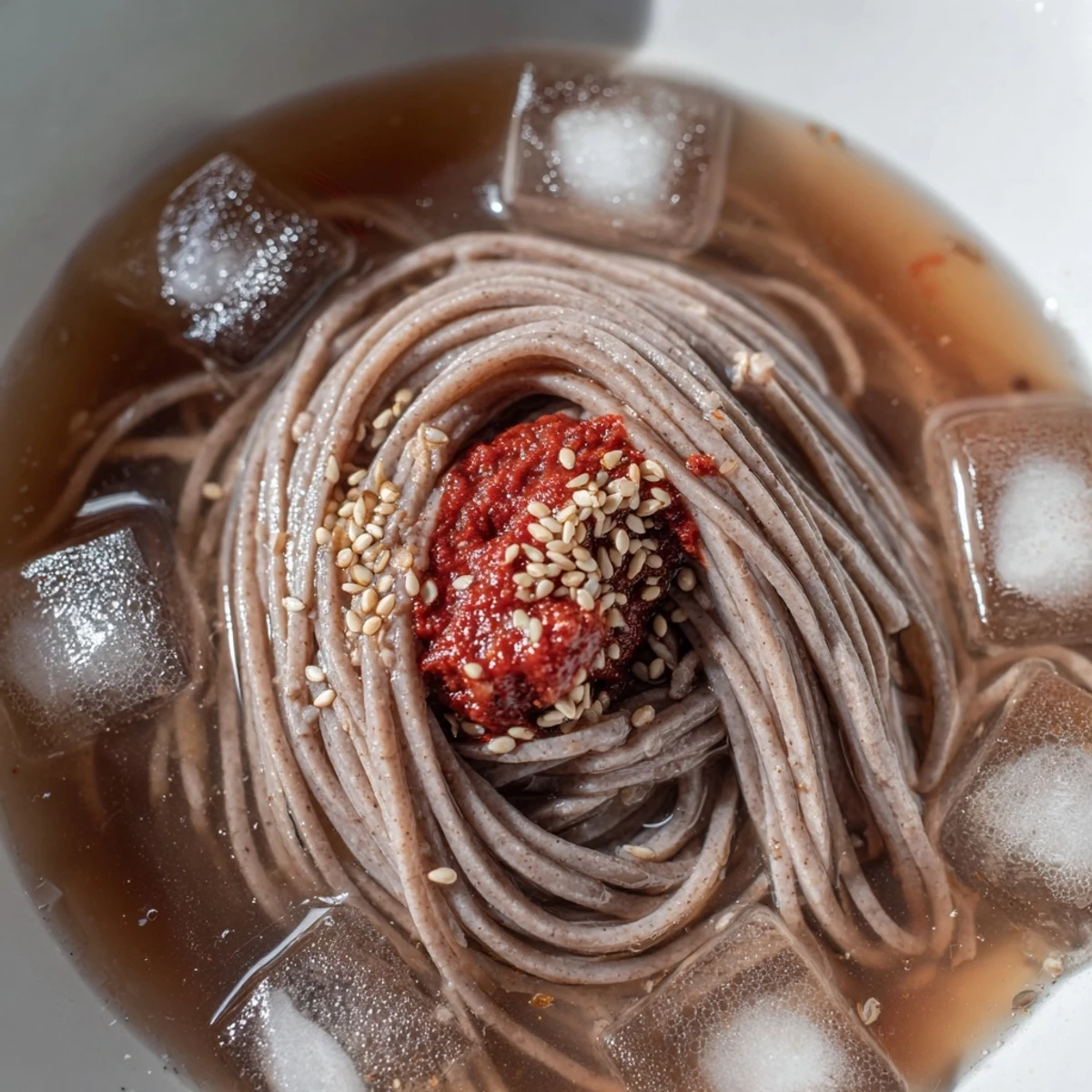
Save Experience the refreshing flavors of authentic Korean naengmyeon, featuring springy buckwheat noodles submerged in an ice-cold tangy broth. This traditional Korean dish combines the perfect balance of sweet, sour, and savory notes, topped with tender beef brisket, crisp Asian pear, and velvety hard-boiled eggs. The secret lies in the chilled beef-based broth enhanced with rice vinegar and sesame oil, creating a truly cooling sensation ideal for sweltering summer days. Each bowl offers textural contrast from chewy noodles to crisp vegetables, while the ice cubes maintain that signature icy temperature that makes naengmyeon so uniquely satisfying.
The first time I had naengmyeon was at a tiny Korean restaurant in LA where the air conditioner had broken and everyone was fanning themselves with menus. The owner brought out these stainless steel bowls with ice cubes clinking against the sides, steam somehow rising from something completely cold. One slurp of those chewy noodles in that tangy broth and I forgot all about the heat outside.
Last summer my neighbor came over sweaty from gardening and I dropped a bowl of this in front of her without explanation. She took one bite, closed her eyes, and asked if I could teach her the recipe before she even finished chewing. Now we trade jars of pre-made broth back and forth across the fence.
Ingredients
- Beef broth: Homemade gives the cleanest flavor but low-sodium works perfectly fine
- Rice vinegar: This is what makes that distinctive tangy brightness
- Naengmyeon noodles: Look for Korean buckwheat noodles in the Asian aisle
- Asian pear: Adds this incredible subtle sweetness you cannot substitute
- Cucumber: Thin slices give crunch and freshness in every spoonful
- Ice cubes: Non-negotiable for keeping everything shockingly cold
Instructions
- Whisk the cold broth:
- Combine beef broth, cold water, rice vinegar, sugar, soy sauce, sesame oil, and salt in a bowl. Stir until the sugar disappears completely into the liquid.
- Prep all the toppings:
- Boil eggs for exactly 10 minutes, then plunge them into ice water for easy peeling. Slice your beef, cucumber, and Asian pear as thinly as your knife will allow.
- Cook and chill the noodles:
- Boil noodles for 3 to 4 minutes until they are chewy but not soft. Drain and rinse under freezing cold water while rubbing them gently to remove starch.
- Build your bowls:
- Divide noodles among four bowls and pour over that ice-cold broth. Arrange cucumber, pear, beef, and egg halves on top like you are plating something precious.
- Finish with flourish:
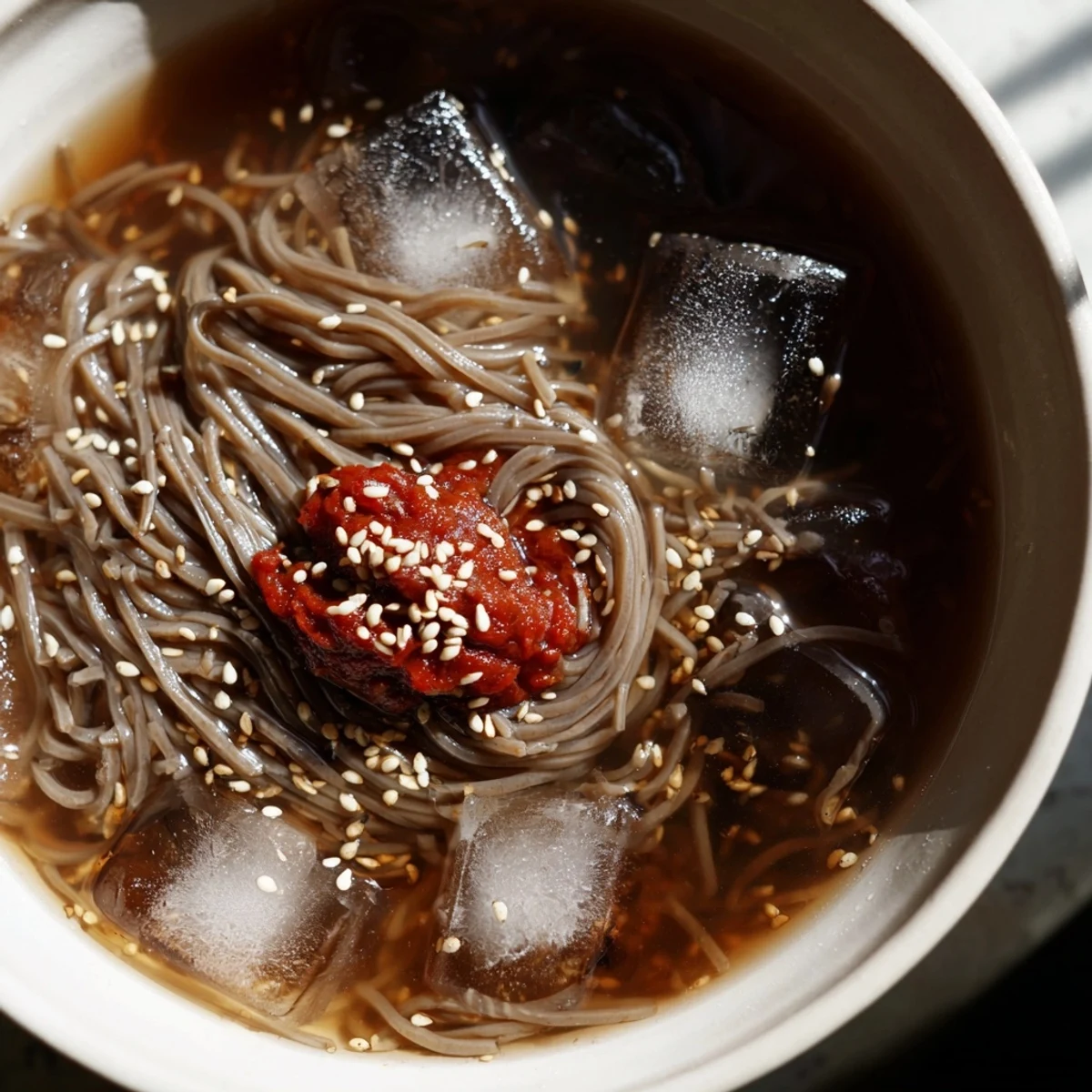
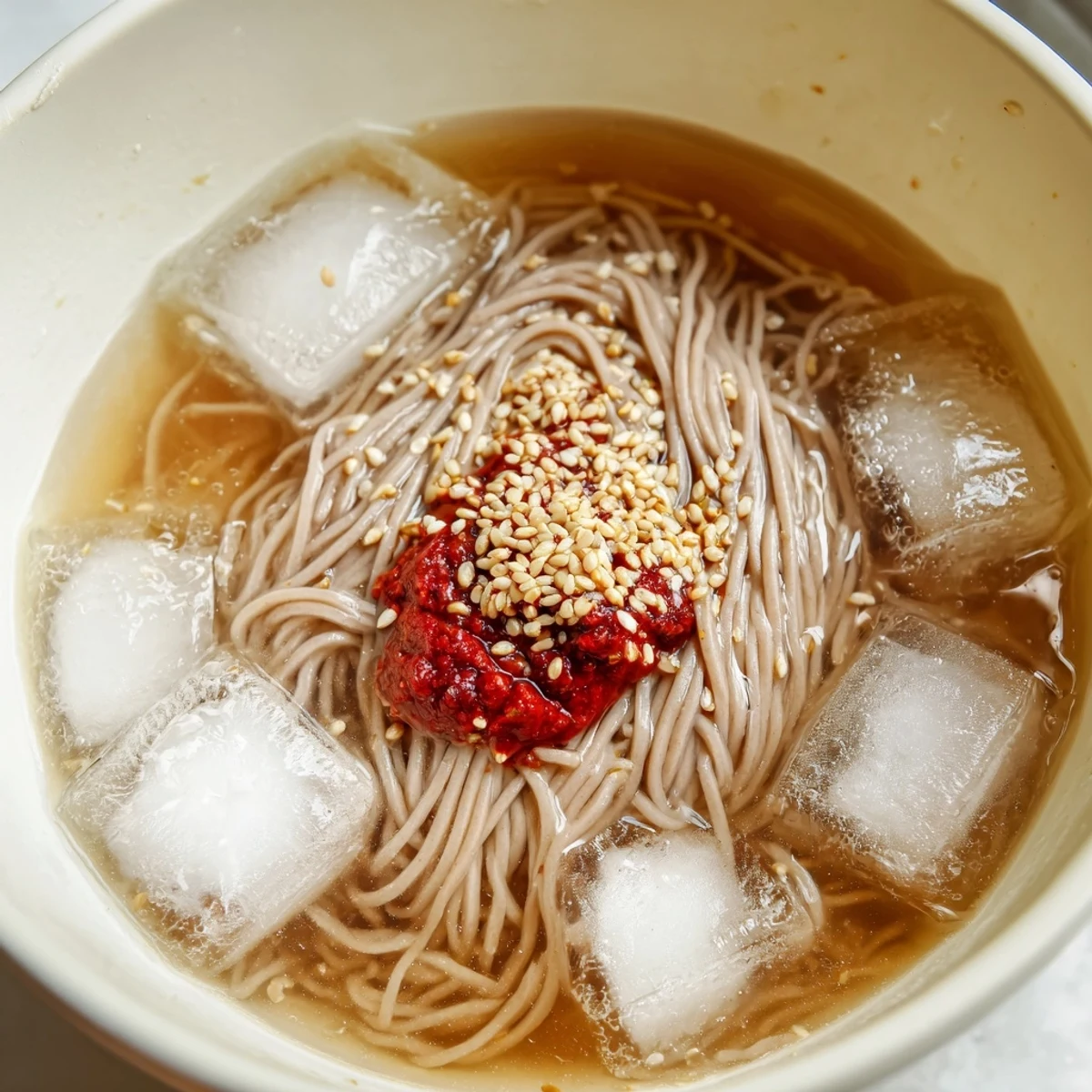
- Add ice cubes to each bowl, scatter sesame seeds, and add gochujang if you want some gentle heat.
 Save
Save My friend Jae told me that in Korea families eat naengmyeon on the hottest days of the year, which makes perfect sense once you understand how the body responds to cold food. Now when the temperature climbs past ninety degrees, I reach for the broth instead of the ice cream maker.
Making It Your Own
The broth ratio is highly personal once you make it a few times. I add extra vinegar on days when I want it sharper, while my mother-in-law doubles the sugar because she claims American ingredients are less sweet than Korean ones.
Temperature Matters
Some people freeze their serving bowls beforehand while others keep ice cube trays dedicated solely to broth. I have started freezing small cubes of seasoned broth to drop into the bowls without diluting anything.
Weekend Prep Strategy
Sunday afternoons I make a double batch of broth and cook all the toppings. The noodles take literally four minutes so they are cooked to order while the broth chills and the toppings wait in containers.
- Hard-boiled eggs keep for a week in the fridge
- Sliced pears oxidize so toss them in lemon water first
- The broth actually develops more flavor after sitting for a day
 Save
Save There is something deeply satisfying about eating soup when everyone else is complaining about the heat. Maybe that is why this recipe has earned permanent space in my summer rotation.
Recipe FAQs
- → What makes naengmyeon noodles unique?
-
Naengmyeon noodles are made primarily from buckwheat and sweet potato starch, creating an exceptionally chewy and springy texture that holds up beautifully in cold broth. Their distinctive slightly gray appearance and firm bite set them apart from other Asian noodle varieties.
- → Can I make naengmyeon ahead of time?
-
Absolutely! Prepare the broth up to 2 days in advance and keep it refrigerated. The noodles can be cooked, rinsed, and stored separately for up to 24 hours. Assemble just before serving with ice cubes for the freshest texture and coldest temperature.
- → What can I substitute for naengmyeon noodles?
-
Soba noodles made from buckwheat are the closest alternative, offering similar nutty flavor and texture. For a gluten-free option, use kelp noodles or thin rice noodles, though they'll have a different mouthfeel than traditional naengmyeon.
- → Why is ice traditionally served with naengmyeon?
-
Ice cubes maintain the soup's freezing temperature throughout the meal, preventing the broth from warming up while you eat. This continuous coldness is essential to the authentic naengmyeon experience, as the dish is meant to be enjoyed refreshingly chilled.
- → How do I eat naengmyeon properly?
-
Use scissors to cut the long noodles into manageable sections before eating. Mix the gochujang and mustard into the broth according to taste. The noodles are typically slurped to enjoy both the flavor and cooling effect, while the toppings can be eaten between bites of noodles.
- → Can naengmyeon be served warm?
-
While traditional naengmyeon is exclusively served cold, there is a warm variation called on-naengmyeon served in hot beef broth. However, the cold version is the most common and beloved preparation, especially during summer months in Korea.