
 Save
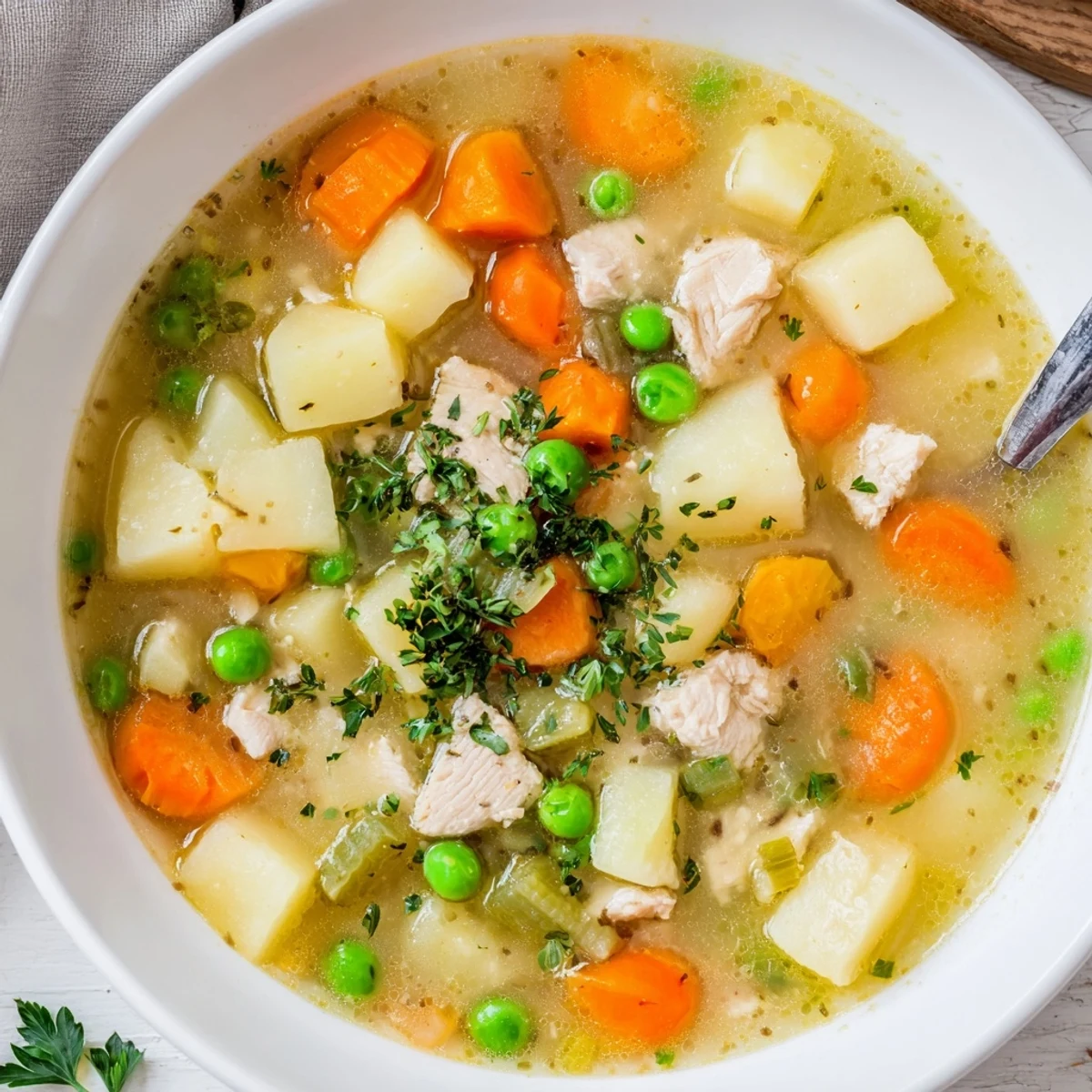
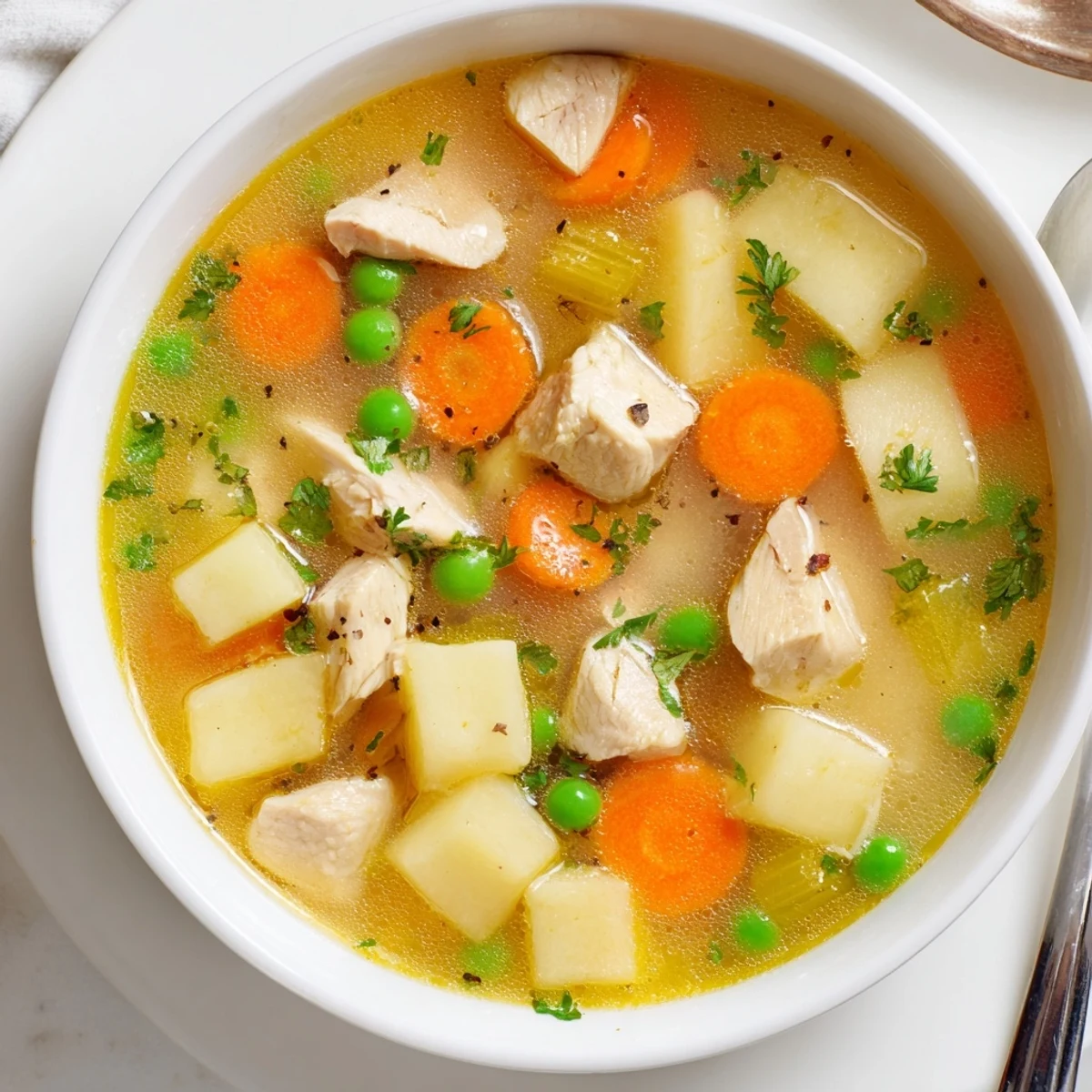
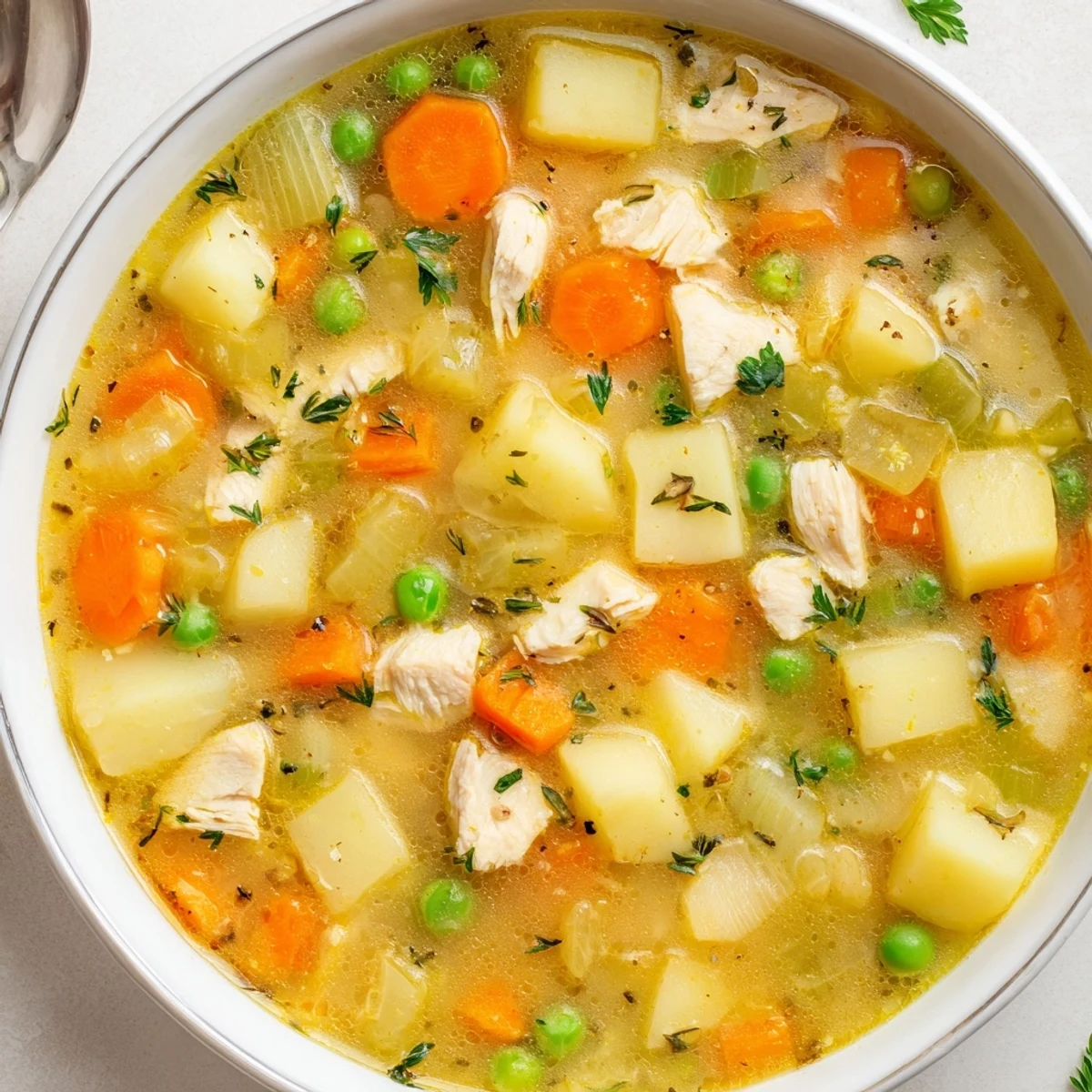
Save This comforting chicken and potato soup combines diced chicken, cubed potatoes, carrots, celery, onion and peas in a fragrant low-sodium broth scented with thyme, rosemary and a bay leaf. Start by sautéing onion, carrots and celery, add garlic and brown the chicken briefly. Add potatoes and liquid, simmer about 25–30 minutes until everything is tender, then stir in peas and finish with chopped parsley. Serves 4; total time about one hour. For richer texture, use thighs or a splash of cream at the end.
Steam fogged my glasses as I leaned over the bubbling pot, the scent of thyme and sweet carrots drifting up like an invitation. This chicken soup recipe first happened on a drizzly weekday when takeout menus seemed grim, and instead, the coziness of simmering broth felt like the right kind of comfort. I didn’t measure much—just trusted the golden rule that vegetables, chicken, and potatoes together can never steer you wrong. There is something quietly triumphant about transforming a handful of fridge basics into something so warming.
Not long after I nailed the recipe, I made it for two friends who showed up unexpected on a rainy Sunday, shoes muddy and moods low. We circled the table with chipped bowls, laughing over steamy soup, the kitchen windows fogged from the heat and our city anxieties finally dissolving for an hour. When someone asked for seconds, I just ladled out more without apology for the mess or muddled measuring. That moment made this dish a quiet reassurance, more about spirit than rules.
Ingredients
- Boneless, skinless chicken breasts: Dicing the chicken small means it cooks quickly and soaks up all that broth flavor—if you have thighs, don’t hesitate to swap them in for richer bites.
- Potatoes: Starchier varieties turn creamy in the broth; keep the pieces chunky so they hold shape, and don’t rush the simmering step.
- Carrots: Sliced thin, they add gentle sweetness and gorgeous color—use rainbow carrots for a cheerier bowl.
- Celery: I once learned the leaves have the most flavor, so I always use them here for an aromatic depth.
- Onion: Chopping it fine helps it nearly dissolve and flavors the foundation; don’t skip the browning step.
- Garlic: Minced fresh, the aroma signals the soup is nearly ready—wait for the first whiff, it’s worth it.
- Frozen peas: The last addition brings a pop of color and sweetness—add straight from the freezer so they stay bright.
- Low-sodium chicken broth: Lets you control the salt and doesn’t overpower the other ingredients’ flavors.
- Water: Balances the broth and stretches the soup just enough for everyone to have seconds.
- Bay leaf: I always remember to fish it out right at the end—a fragrant little detail that matters.
- Dried thyme: Earthy and classic, just a teaspoon transforms the background.
- Dried rosemary: Crumble it in your palm before adding so it releases every bit of piney aroma.
- Salt and black pepper: Taste right at the end, as everything else will offer its character once cooked.
- Fresh parsley: Chopped over the finished bowls, it makes the flavor sing and looks inviting.
- Olive oil: I use it for sautéing to coax the sweetness from every vegetable without overwhelming the soup.
Instructions
- Sauté your base:
- Heat the olive oil in your soup pot until shimmering, then add onion, carrots, and celery—a symphony of sizzle and sweet fragrance fills the kitchen as you stir for 4-5 minutes.
- Bring out the garlic:
- Spoon in the minced garlic, stirring well; when it releases its aroma, you know you’re ready for more steps.
- Add the chicken:
- Tumble in the diced chicken pieces and gently toss until each cube is just pale and golden at the edges but not cooked through yet.
- Simmer with potatoes:
- Mix in the potatoes, then pour in the broth and water—drop in the bay leaf, thyme, and rosemary, and let everything come to a friendly boil before reducing to a simmer for 25 minutes.
- Add the finishing touches:
- Stir in frozen peas and let the soup gently simmer for another 5 minutes, enough to turn the peas vivid and sweet.
- Season and serve:
- Scoop out the bay leaf, then season with salt and pepper, ladle into bowls, and finish with a confetti of chopped parsley.
 Save
Save The first time a child asked for thirds was a tiny triumph—a pot scraped clean, laughter at the table, and no worries about leftovers. It was then I realized soup could feel like more than a meal—it became permission to pause and savor whoever was in front of me that evening.
How to Make It Your Own
Some nights I’ve thrown in leftover green beans or swapped peas for corn, and the soup never complained. The beauty is how forgiving this recipe can be; every fridge clean-out delivers a new surprise, and even zucchini or spinach folds in nicely near the end. The base remains sturdy, inviting you to improvise as much or as little as you like.
The Little Details That Matter
If you use stock from scratch, the depth of flavor lengthens the finish of every bite—and a squeeze of lemon at the end wakes up all the other flavors. Don’t underestimate the effect of parsley sprinkled on top: it may seem ornamental, but it lifts the soup visually and in each spoonful. Plus, it’s always a quiet thrill when folks notice the difference a single herb makes.
Serving, Storing, and Warming Up Leftovers
The next day, the flavors deepen, and sometimes I sneak a little more broth in before reheating to loosen things up. If you’re storing leftovers, a splash of water and a swirl of parsley freshens the soup right back to its first-day glory. Crusty bread and a side salad never hurt, either.
- Let the soup cool before refrigerating so flavors don’t dull.
- Leftovers reheat best over low heat, with a little broth added if needed.
- If freezing, skip the parsley till just before serving for brightness.
 Save
Save If you ever need something cozy yet simple, I hope this chicken soup brings you the same warmth and easy comfort it’s given me. Sometimes the best meals are the unplanned ones that feel like the kitchen knew just what you needed.
Recipe FAQs
- → How long should I simmer the soup for tender potatoes and cooked chicken?
-
After adding the potatoes and broth, simmer uncovered for about 25 minutes. Check potatoes with a fork; they should be easily pierced and the chicken cooked through. If pieces are larger, allow a few extra minutes.
- → Can I substitute chicken thighs for the breasts?
-
Yes. Thighs add more richness and stay moist; brown them briefly as with breasts. Because thighs can be slightly smaller or thicker, check doneness and adjust simmer time by a few minutes if needed.
- → What are easy ways to thicken the broth?
-
For a heartier texture, mash a cup of cooked potatoes into the broth, stir in a cornstarch slurry (1 tbsp cornstarch + 1 tbsp cold water) and simmer until thickened, or swirl in a splash of cream at the end.
- → Which herbs and aromatics work best with this soup?
-
Thyme, rosemary and a bay leaf provide a warm herbal backbone. Onion, garlic, carrots and celery form the classic aromatic base; finish with fresh parsley for brightness.
- → How should I store and reheat leftovers?
-
Cool quickly and refrigerate in an airtight container for up to 3–4 days. Reheat gently on the stove over low heat, adding a splash of water or broth if the soup has thickened. Freeze up to 3 months; thaw overnight in the fridge before reheating.
- → Is this suitable for a gluten-free diet?
-
Yes, the ingredients listed are naturally gluten-free. Verify the chicken broth label to ensure it’s certified gluten-free, as some commercial broths may contain additives with gluten.