
 Save
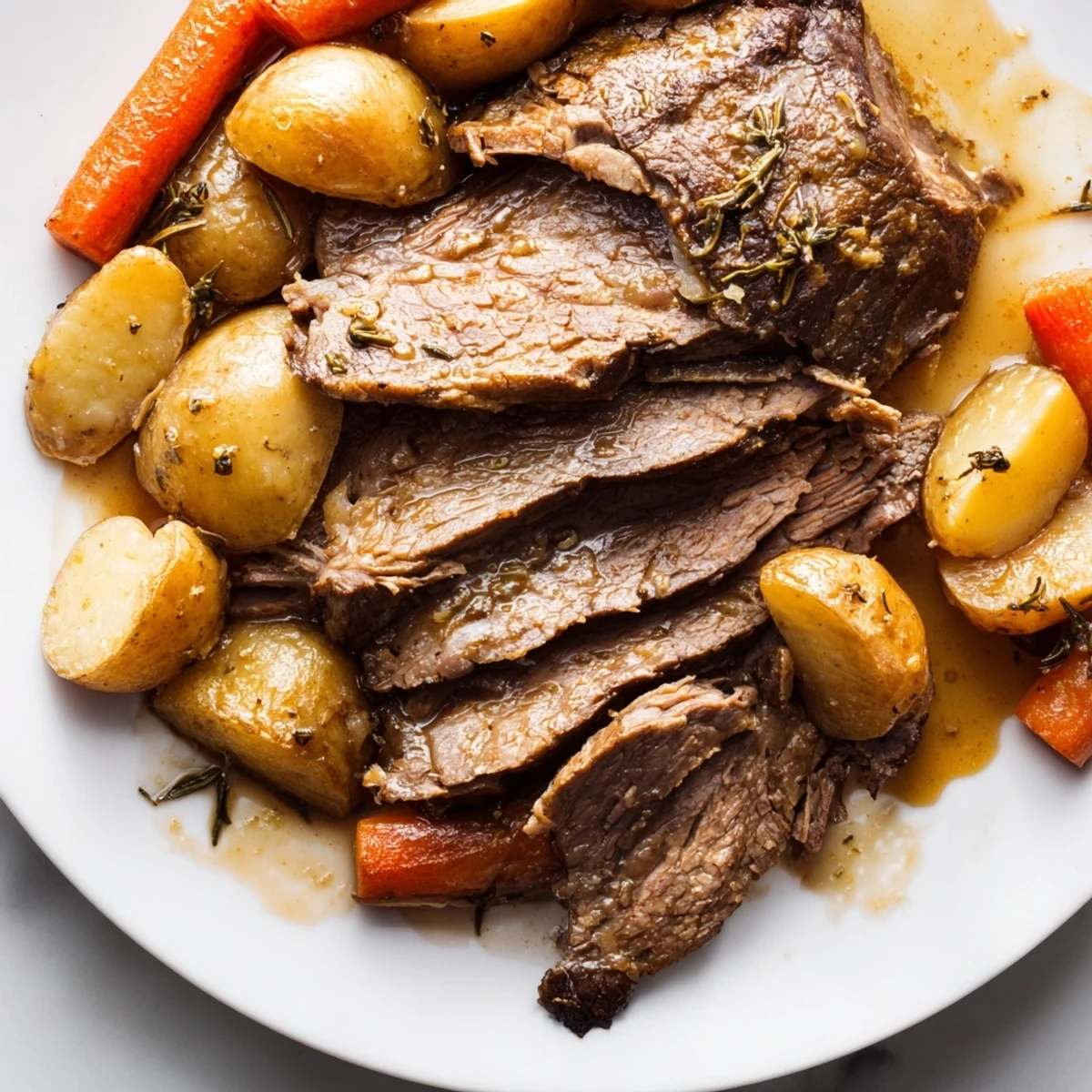
Save This dish features a succulent beef roast seared to lock in juices, then slow-cooked with potatoes, carrots, onions, and aromatic herbs. The pan juices and optional red wine create a rich, flavorful broth that infuses the meat and vegetables during roasting. Perfect for an indulgent family meal, it requires simple prep and hands-off cooking to yield tender, golden results with balanced seasoning.
There's something about a roasting pan that fills the kitchen with a smell you can't ignore—that deep, meaty sizzle mixed with caramelizing onions that pulls everyone toward the oven. I discovered this beef roast on a cold Sunday when I had people coming over and wanted something that would taste like I'd been cooking all day without actually fussing in the kitchen. The magic is in the sear, the long gentle roast, and letting those potatoes soak up every ounce of beef flavor that pools at the bottom of the pan.
I made this for the first time on a gray afternoon when my sister called asking what I was cooking—the aroma had drifted next door, apparently. By the time she showed up, the kitchen was warm and steamy, the kind of place where you want to linger with a glass of wine while waiting for dinner. That's when I realized this dish has a secret power: it makes people feel cared for without needing any fuss from you.
Ingredients
- Beef roast (chuck or rump): Look for a piece that's well-marbled with fat running through it—that's what becomes tender and flavorful after roasting, not a lean cut.
- Salt and black pepper: Don't skimp on seasoning the beef before searing; this is your first layer of flavor.
- Olive oil: Use something you'd actually taste, not the bottom-shelf stuff, since it's going into the pan.
- Potatoes: Cut them large—smaller pieces fall apart or turn to mush by the time the beef is tender.
- Carrots and onions: These aren't just vegetables; they're flavor builders that break down and season the whole dish.
- Garlic cloves: Smashing them (not mincing) keeps them substantial enough to roast without disappearing into mush.
- Thyme and rosemary: Dried herbs are perfectly fine here and often taste better than fresh in a long roast.
- Bay leaves: They add an earthy note that rounds out the beef flavor—don't skip them.
- Beef broth and red wine: The broth carries flavor into the vegetables; the wine adds depth, but regular broth works just as well alone.
Instructions
- Get your oven ready:
- Preheat to 180°C (350°F) so the oven is hot when you need it.
- Dry and season the beef:
- Pat the roast completely dry with paper towels—this is non-negotiable for a good sear. Rub generously with salt and black pepper on all sides, and let it sit for a minute so the seasoning can stick.
- Sear the meat:
- Heat olive oil in your Dutch oven over medium-high heat until it shimmers. Lay the beef in carefully and listen for that aggressive sizzle—don't move it for 3–4 minutes per side. You want a dark brown crust on every surface, which is where all the flavor lives.
- Build the flavor base:
- Remove the beef temporarily and add onions and garlic to the same pan. They'll stick to the bottom and soak up all the brown bits left behind by the meat—that's liquid gold. Stir for just 2 minutes; you want them soft, not caramelized.
- Layer everything together:
- Return the beef to the pan and nestle potatoes and carrots around it. Scatter thyme, rosemary, and bay leaves across the top, then pour beef broth and wine over everything. The liquid should come halfway up the sides of the beef, not cover it completely.
- First roast (covered):
- Cover your pan tightly with a lid or foil and slide it into the oven for 1 hour. This is the low-and-slow phase where steam keeps everything moist and flavors meld.
- Second roast (uncovered):
- Remove the cover and roast for another 35–40 minutes. The beef should shred easily with a fork, and the potatoes should be golden and crispy on top. If the liquid is evaporating too fast, add a splash of broth.
- Rest and serve:
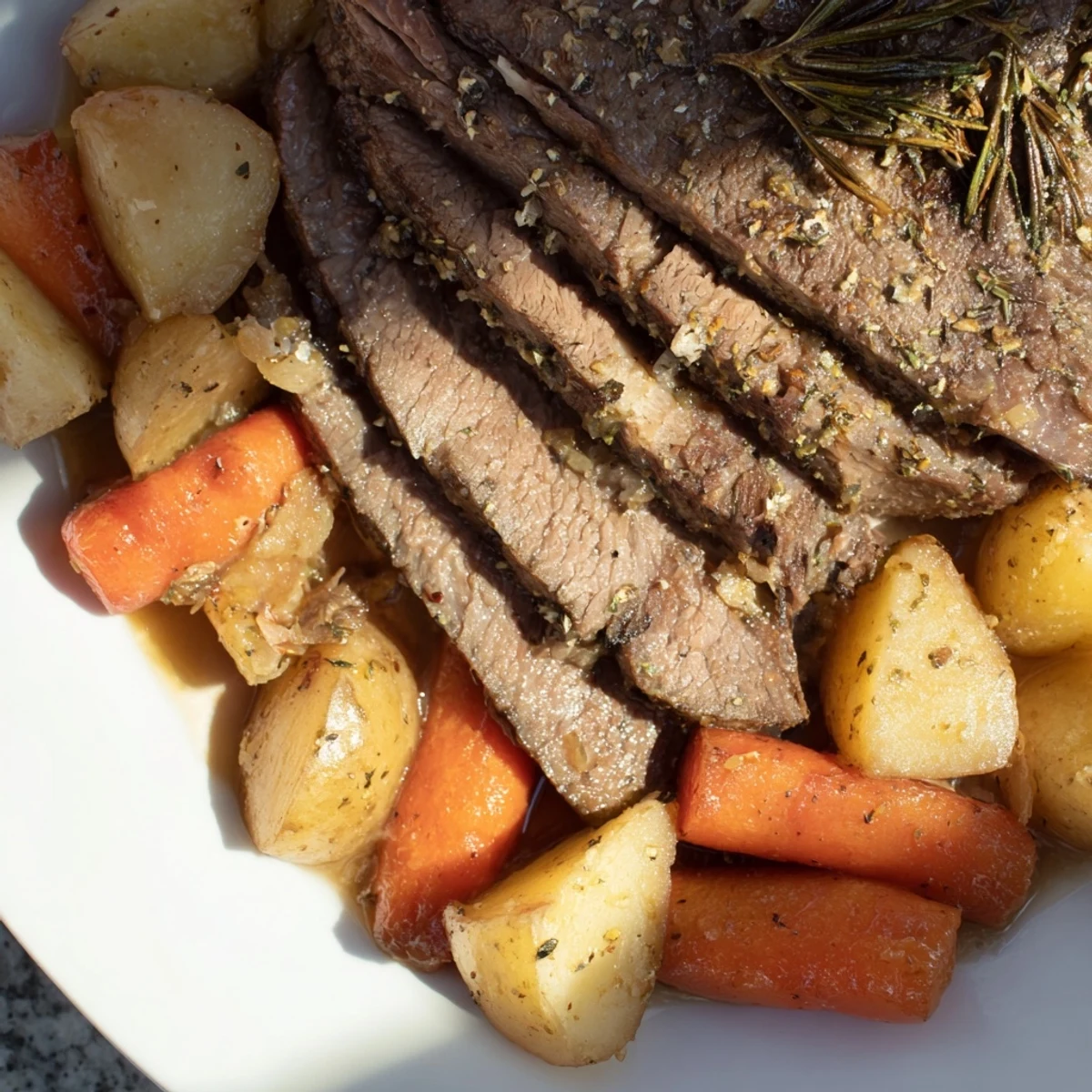
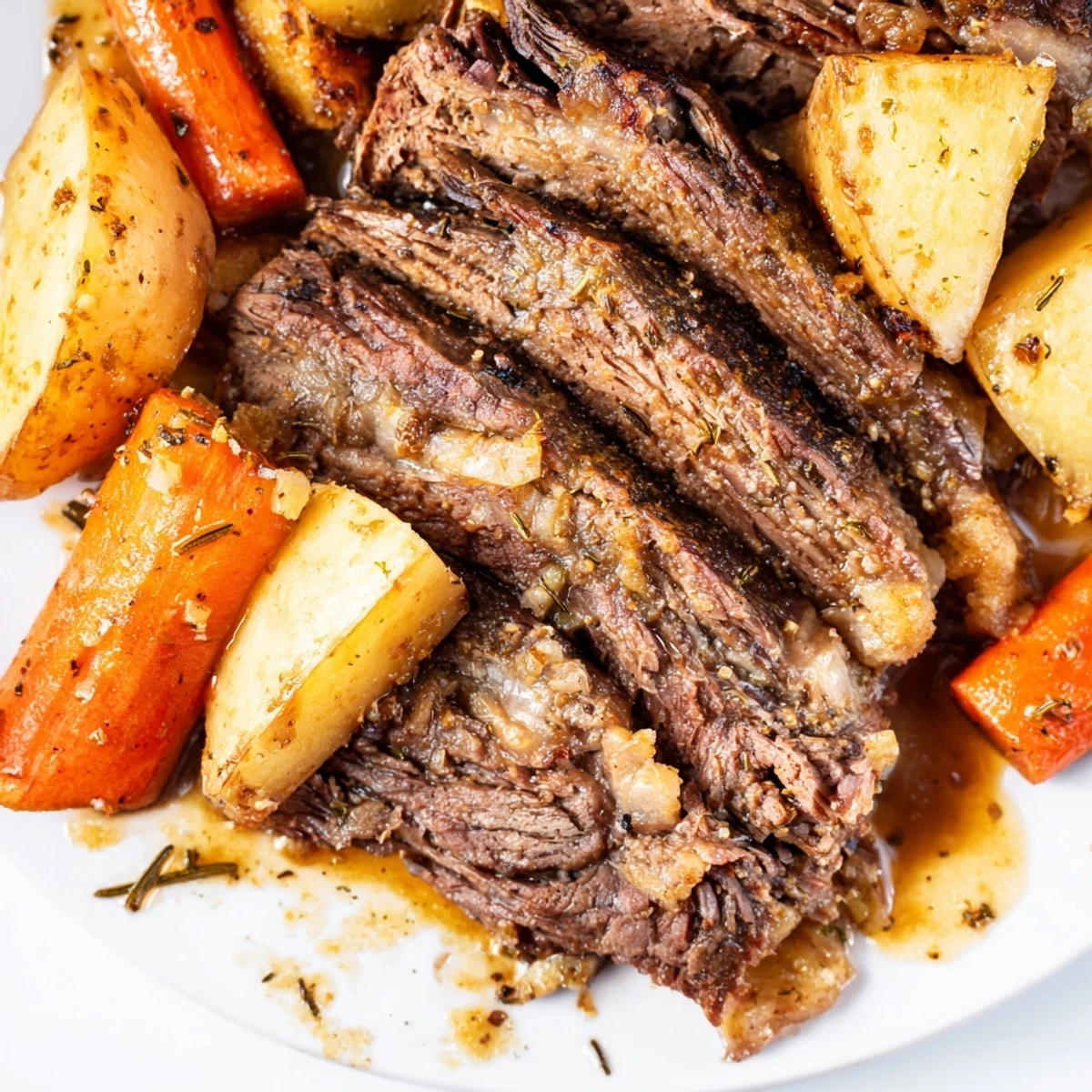
- Let the whole pan sit for 10 minutes—this lets the meat relax and reabsorb its juices. Slice the beef, pile it onto plates with potatoes and carrots, and pour those savory pan juices over everything.
 Save
Save Years later, I realize this dish became my go-to when I wanted to feel competent in the kitchen without stress—and when I wanted to feed people something that says without words that I genuinely care. It's the meal that taught me that the best cooking doesn't shout; it just fills the room with warmth.
Why This Becomes a Favorite
Every oven is different, and your roasting time might be 15 minutes shorter or longer depending on how deep and even your heat is. The first time you make this, peek at 50 minutes instead of waiting the full hour—knowing your oven beats following a clock. The smell alone becomes your guide after a while; you'll know it's ready when the aroma is so insistent you can't ignore it anymore.
Variations That Work Beautifully
Once you nail the basic formula, you can bend it in different directions without breaking anything. Parsnips add a subtle sweetness that's lovely in fall, celery brings a green note that cuts through the richness, and if you're feeling adventurous, a splash of balsamic vinegar in the braising liquid adds complexity without shouting about it. The core technique—sear, build flavor, roast covered then uncovered—stays the same, so you're just playing with flavors, not learning a new dish.
The Pairing Question
A bold red wine isn't just nice to have alongside this—it's a conversation. The tannins in a Cabernet cut through the richness of the beef while echoing the wine you roasted it in, and there's something satisfying about that harmony. If red wine isn't your thing, a darker ale or even a full-bodied cider works beautifully, and honestly, good company matters more than what's in the glass.
- Make the potatoes bigger than you think you need to—they shrink as they roast and absorb liquid.
- If your pan is smaller and the beef doesn't fit flat, that's okay; it can roast on an angle.
- Save every drop of pan juice; it's more valuable than the meat itself.
 Save
Save This is the kind of meal that settles into your rotation without you planning it, becoming the one you reach for when you want to feel grounded. Make it once, and you'll make it again.
Recipe FAQs
- → What cut of beef works best?
-
Chuck or rump roast are ideal for their marbling and tenderness after slow roasting.
- → How to ensure the beef stays juicy?
-
Searing the beef first locks in juices, then slow roasting covered preserves moisture and tenderness.
- → Can I substitute red wine in the liquid?
-
Yes, using extra beef broth can add richness if wine is not preferred or available.
- → What vegetables complement this dish?
-
Potatoes, carrots, and onions absorb flavors while adding texture; garlic and herbs enhance aroma.
- → Is there a recommended resting time?
-
Rest the roast for about 10 minutes after cooking to allow juices to redistribute for optimal tenderness.