
 Save
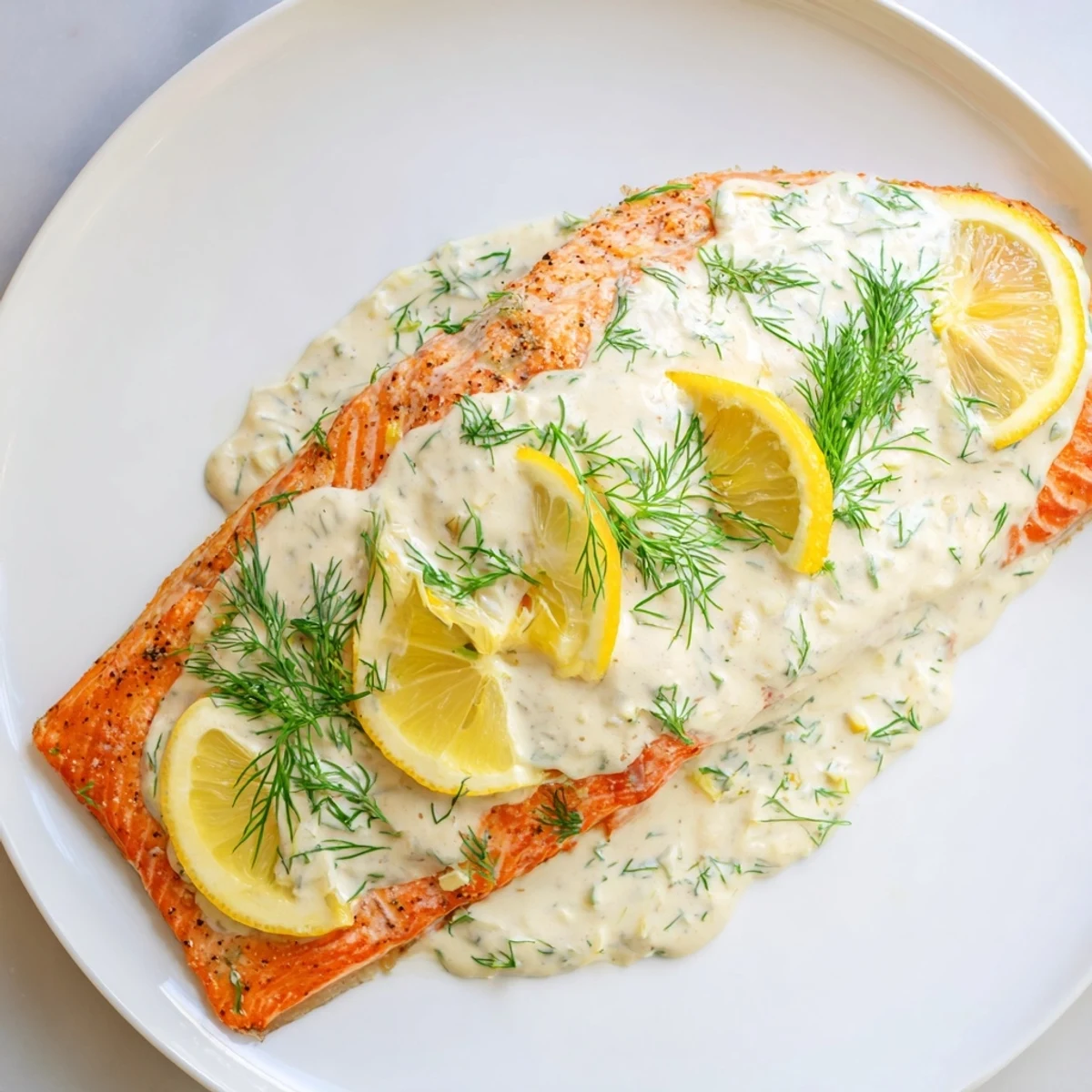
Save This dish features tender salmon fillets baked to perfection and topped with a rich dill and lemon sauce. The sauce blends butter, garlic, cream, lemon zest, juice, and fresh dill for a bright yet creamy finish. Ideal for quick preparation, it suits both casual weeknights and special dinners. Garnish with lemon slices and extra dill for added freshness. Pair it with steamed vegetables or light sides to complete the meal.
The kitchen smelled like salt and citrus the evening I realized salmon didn't need to be complicated. I had twenty minutes before friends arrived, a packet of fillets I'd forgotten to marinate, and a lemon rolling around the counter. That's when this recipe was born—out of necessity, not perfection.
I've made this for my mother on her birthday, for a neighbor who just had surgery, and once for myself on a Tuesday when I needed to remember that cooking could still feel like a small celebration. The smell of garlic hitting warm butter never gets old.
Ingredients
- Salmon fillets (170 g each): Look for bright, firm flesh without a strong fishy smell, and don't worry if they're skin-on—it crisps beautifully in the oven.
- Olive oil: Just enough to help the seasoning stick and keep the surface from drying out.
- Salt and black pepper: Season more than you think you need to, the fish can handle it.
- Unsalted butter: This is the base of your sauce, so use real butter if you can.
- Garlic cloves: Mince them fine so they melt into the cream without leaving sharp bites.
- Heavy cream: It makes the sauce silky and rich, though half-and-half works if you want something lighter.
- Lemon zest and juice: The zest carries the fragrance, the juice brings the brightness.
- Fresh dill: Dried dill won't give you the same grassy, floral lift, so grab a small bunch if you can.
- Lemon slices and dill sprigs: These aren't just for looks, they remind you what's inside before you take the first bite.
Instructions
- Prep the oven and salmon:
- Preheat to 200°C (400°F) and line your baking sheet with parchment. Pat the fillets completely dry—wet fish steams instead of roasting—then brush with olive oil and season both sides with salt and pepper.
- Bake the salmon:
- Slide the sheet into the oven and set a timer for 12 minutes. Check with a fork—the flesh should flake easily and look just opaque in the center.
- Start the sauce:
- While the salmon bakes, melt butter in a small saucepan over medium heat. Add garlic and let it sizzle for about a minute until your kitchen smells like a bistro.
- Build the cream base:
- Pour in the cream, lemon zest, and lemon juice, then let it bubble gently for 2 to 3 minutes, stirring now and then. It should thicken just enough to coat the back of a spoon.
- Finish with dill:
- Pull the pan off the heat and stir in the chopped dill. Taste and adjust salt and pepper—this is your moment to make it yours.
- Plate and serve:
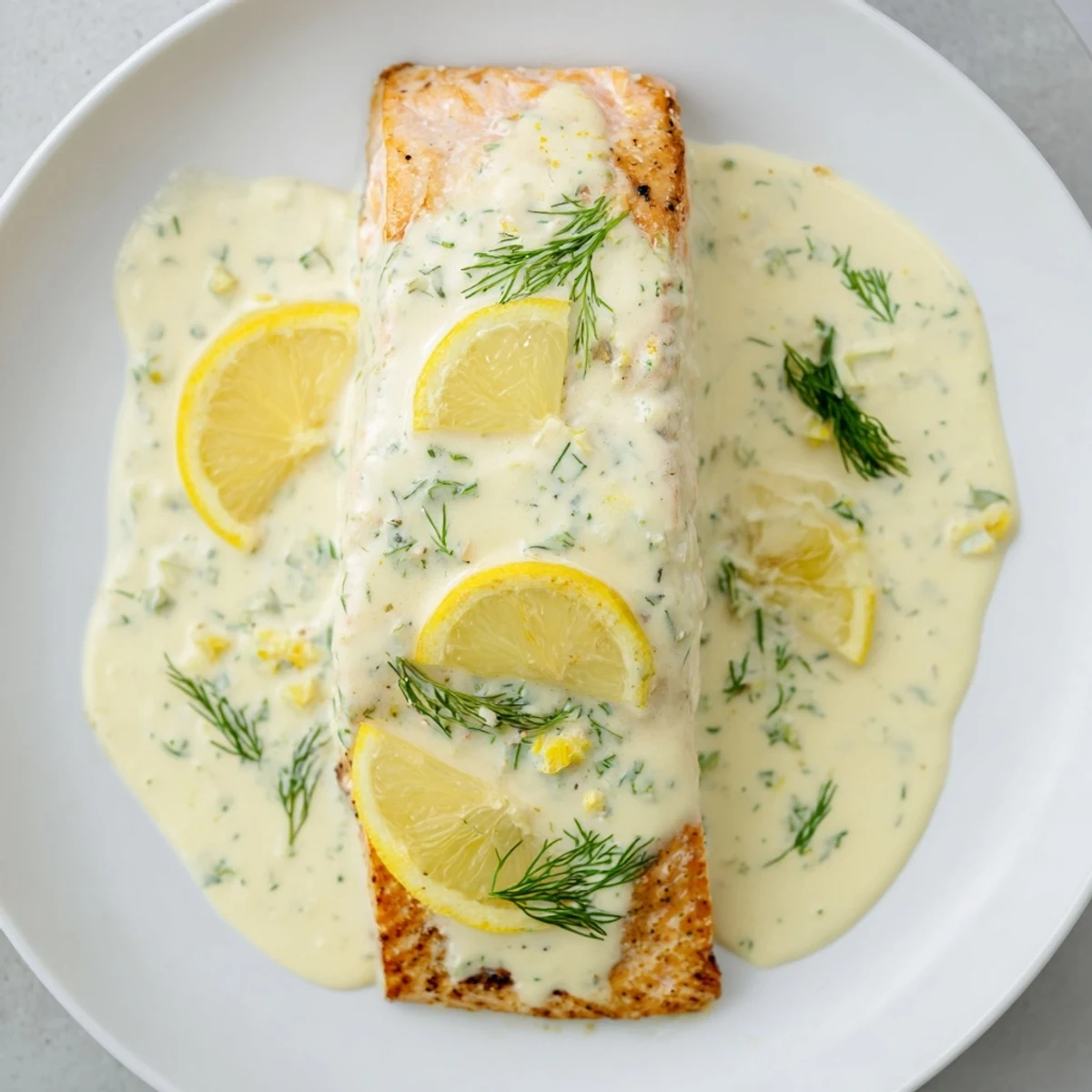
- Set each fillet on a warm plate, spoon the sauce over the top, and tuck a lemon slice and sprig of dill beside it. Serve immediately while everything is still steaming.
 Save
Save My friend once told me this salmon reminded her of a meal she had in Copenhagen years ago, and I didn't have the heart to tell her I'd invented it in a panic. Sometimes the best recipes come from just paying attention to what's in front of you.
What to Serve Alongside
I usually reach for roasted baby potatoes tossed in olive oil and thyme, or steamed asparagus with a squeeze of lemon. A crisp green salad with a lemony vinaigrette keeps the plate from feeling too heavy, and honestly, a good crusty bread to soak up the extra sauce never hurts.
Wine Pairing
A chilled Sauvignon Blanc works beautifully here—the acidity cuts through the cream and echoes the lemon. If you prefer something rounder, a lightly oaked Chardonnay won't fight the dill and will make the whole meal feel a little more indulgent.
Storage and Leftovers
Leftover salmon keeps in the fridge for up to two days in an airtight container. I like to flake it over a salad or toss it with pasta and a little extra sauce the next day. Reheat gently in a low oven or the microwave at half power so it doesn't dry out.
- Store the sauce separately if you can, it reheats better that way.
- Add a tablespoon of cream or milk when warming the sauce to bring back its silky texture.
- Cold salmon straight from the fridge is surprisingly good on toast with a smear of cream cheese and a few capers.
 Save
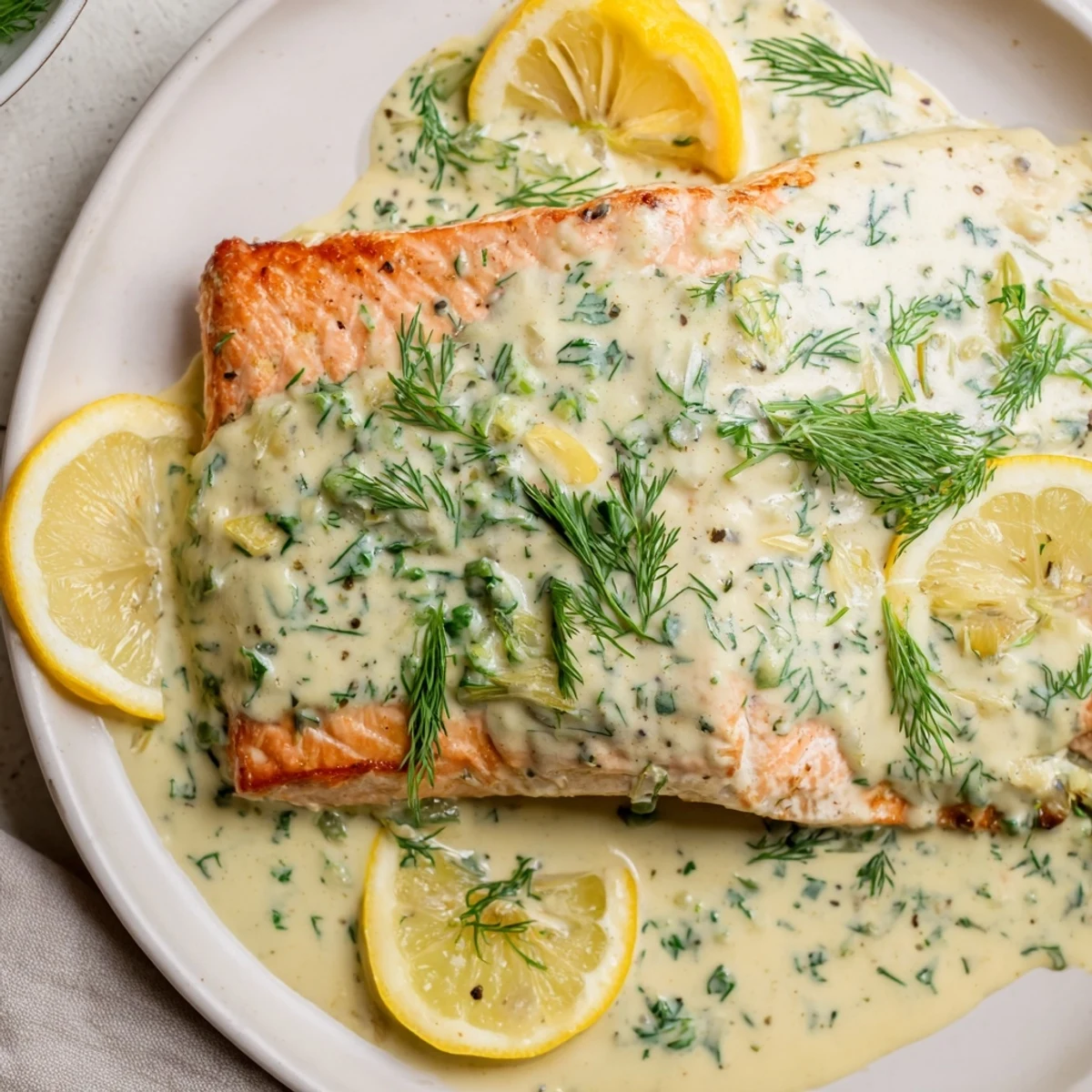
Save This dish taught me that elegance doesn't require complexity, just attention and good timing. I hope it becomes one of those recipes you return to when you want to feel capable and a little bit fancy.
Recipe FAQs
- → What is the best way to tell when the salmon is done?
-
Salmon is cooked when it flakes easily with a fork and reaches an internal temperature of 63°C (145°F).
- → Can I use fresh herbs other than dill?
-
Fresh dill provides a distinctive flavor, but herbs like parsley or tarragon can complement the lemon sauce nicely if preferred.
- → How can I lighten the sauce?
-
Substitute half-and-half or low-fat cream in place of heavy cream for a lighter, less rich sauce.
- → What sides pair well with this salmon dish?
-
Steamed asparagus, roasted potatoes, or a crisp green salad complement the flavors and texture perfectly.
- → Is it better to bake salmon with or without skin?
-
Both work well; skin-on helps retain moisture and can become crispy, but skinless fillets also bake evenly and absorb sauce flavor better.